THE PLACE TO FEEL HISTORY
MIRABELL PALACE AND ITS GARDENS
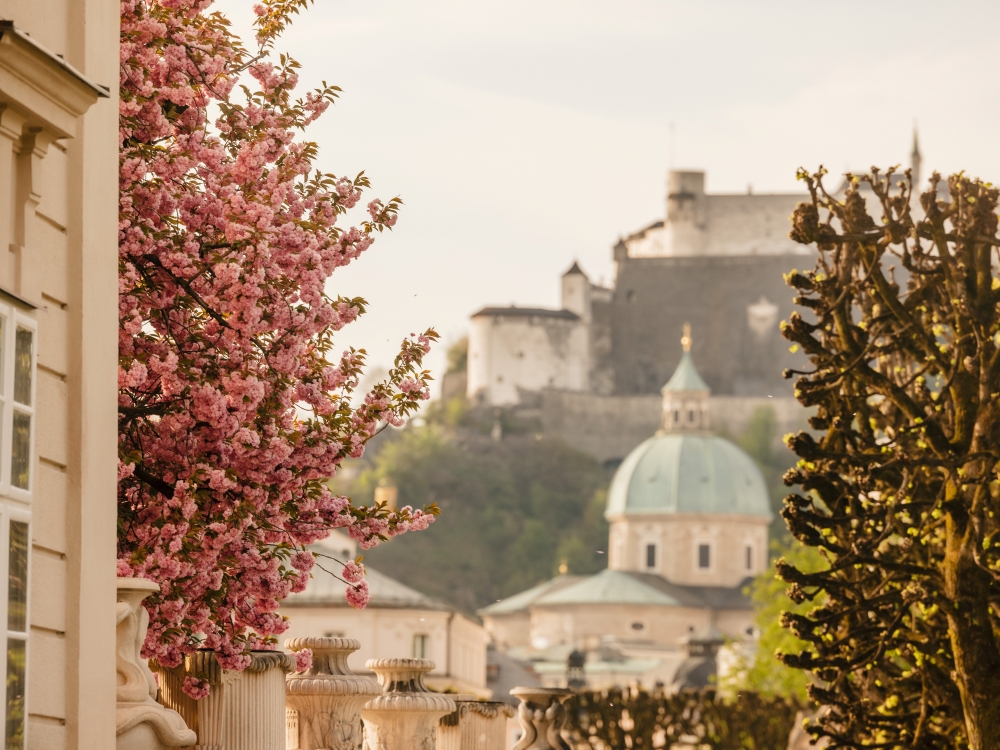
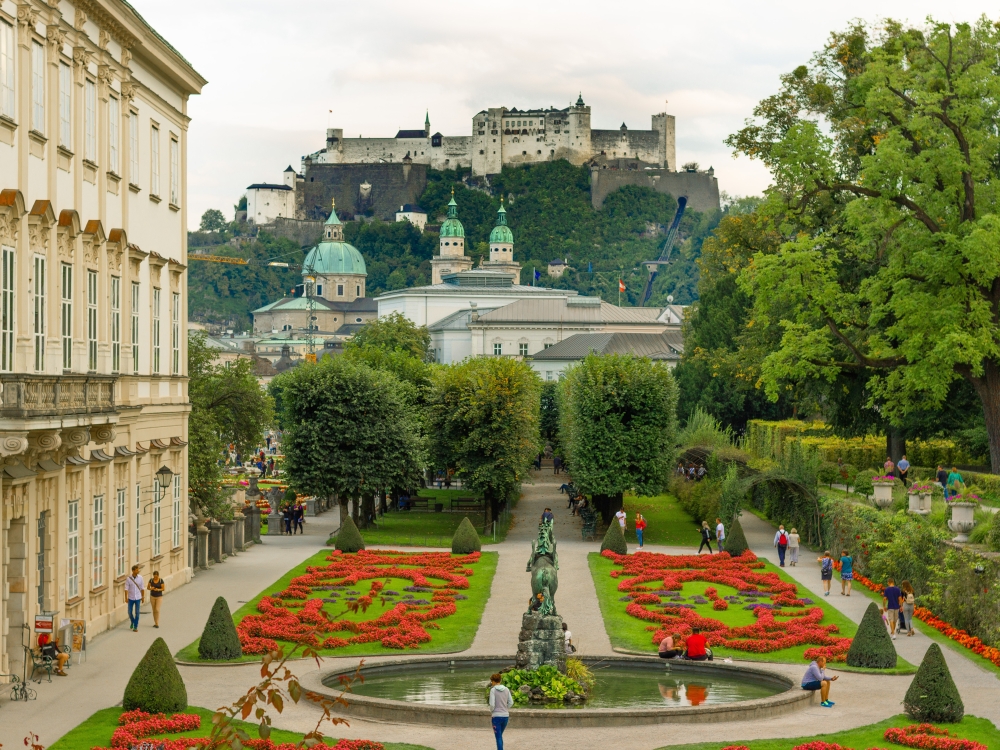
Hardly any other place in Salzburg is as well-known as Mirabell Palace with its magnificent gardens. The bright flowerbeds, the elegant baroque architecture and the unobstructed view of Hohensalzburg Fortress make this place a special attraction – for locals as well as guests from all over the world.
Year after year, numerous wedding couples come here to say “I do” in the magnificent Marble Hall. Fans of the world-famous film and musical “The Sound of Music” relive unforgettable scenes and melodies at the original locations. At the same time, Salzburgers can enjoy the green oasis in the middle of the city – a place of peace, beauty and inspiration.
Mirabell Palace enchants people from all over the world every day with its unique atmosphere.
Love, pomp and fire
The castle’s eventful history began around 1606, when Archbishop Wolf Dietrich had the first castle built here, parts of the foundations of which are still preserved today. He built the castle for his mistress, Salome Alt, with whom he had 15 children. This was probably one of the reasons why he was overthrown and imprisoned in 1612.
The Baroque design and significant expansion of the palace took place in the 1720s. Archbishop Franz Anton von Harrach loved magnificent buildings and, in addition to redesigning the Salzburg Residence, also had Mirabell Palace rebuilt. The master builder was Johann Lucas von Hildebrandt. He built numerous palaces and castles in Austria, as well as St. Peter’s Church in Vienna’s city center.
Around 100 years later, in 1818, a city fire caused extensive damage to the palace. As Salzburg was no longer a separate archbishopric at this time, but belonged to Austria, the renovation was commissioned by Emperor Franz I.
The castle as the center of the city
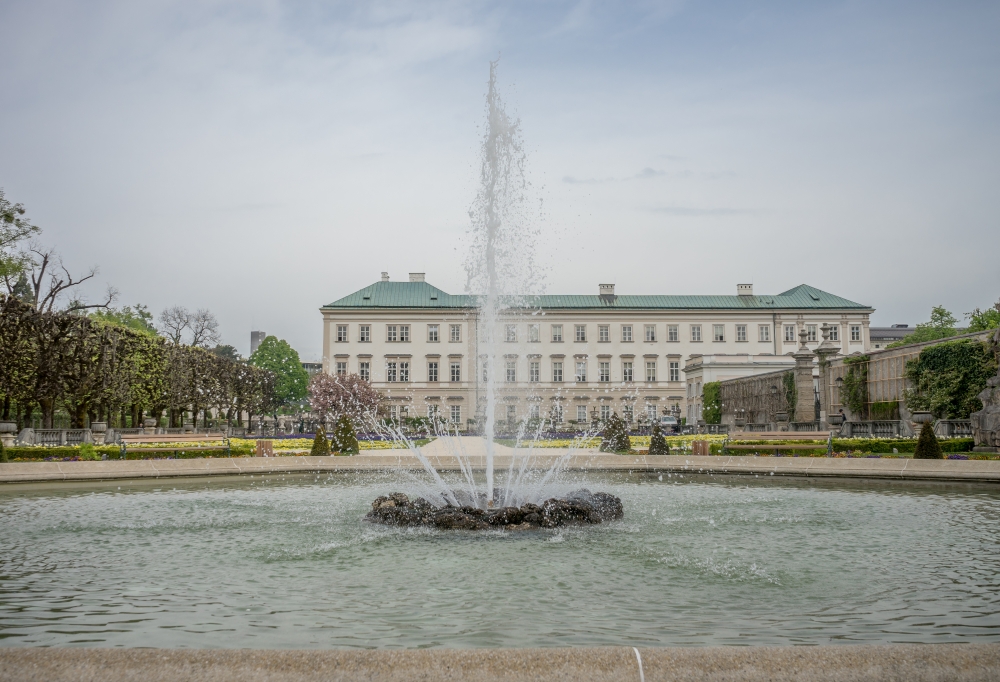
Today, the castle premises are used by the offices of the mayor and the city administration. However, you can still visit the magnificent Marble Hall and the Angels’ Staircase. These were created during the renovation in the 1720s and give an idea of how magnificently the castle was once furnished.
The Marble Hall is now used for weddings in the spirit of its original construction. Couples from all over the world come here to celebrate the most beautiful day of their lives. However, the Marble Hall also regularly hosts classical concerts take place here. A great opportunity to enjoy the ambience of this beautiful hall.
Anyone entering the palace from the garden side (Pegasus Fountain) should definitely take a look at the floor. It has been covered with a modern view of the city of Salzburg and the surrounding area. Here you can test how well you can find your way around Salzburg.
The beautiful gardens of Mirabell
If you would like to stay at one of our Salzburg hotels, IMLAUER Hotel Pitter, IMLAUER & Bräu Hotels Salzburg or IMLAUER Palais Mirabellyou can reach the Rosenhügel in just a few minutes on foot. It offers you the first wonderful view of the palace, garden and fortress.
If you are also a fan of the movie “Sound of Music” about the life of the Trapp family, then your heart will beat faster. The steps down to the garden and the Pegasus fountain here are locations from the famous 1965 music film.
The artfully laid out flowerbeds adorn the large garden with a fountain in the center. The rose garden right next to the palace lends a southern flair. The hedge theater, which also dates back to the 18th century, is somewhat hidden away. Finally, the entrance to the orangery with exotic plants and palm trees is located in a side courtyard.
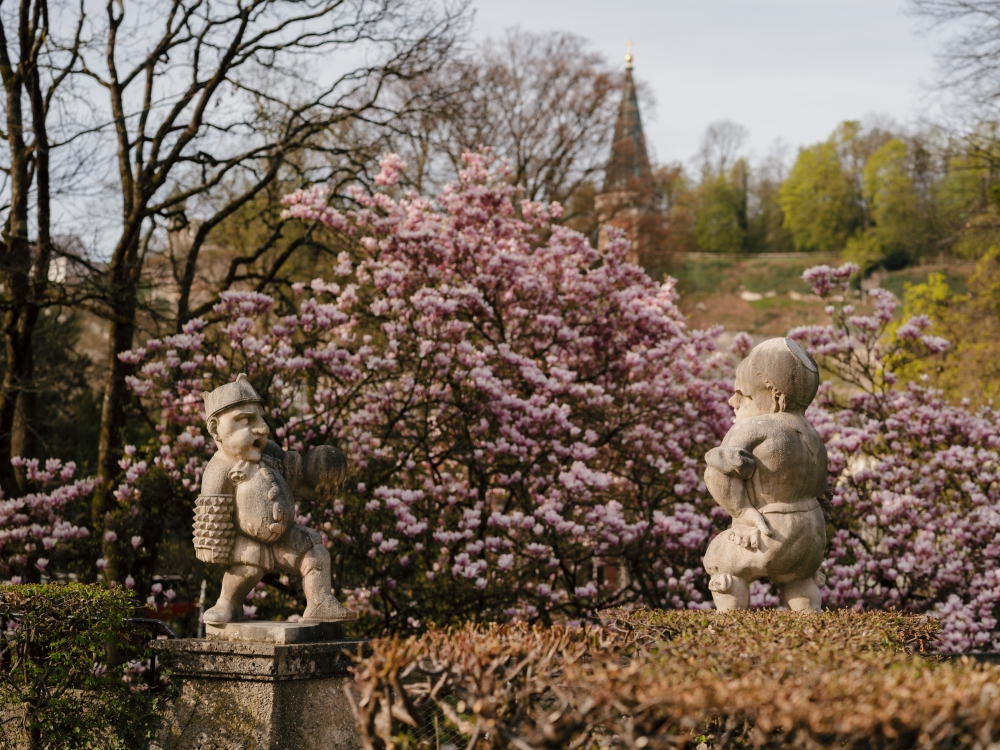
Europe’s oldest dwarf garden
The Mirabell Gardens were redesigned at the end of the 17th century by Johann Bernhard Fischer von Erlach, one of Austria’s most important Baroque architects.
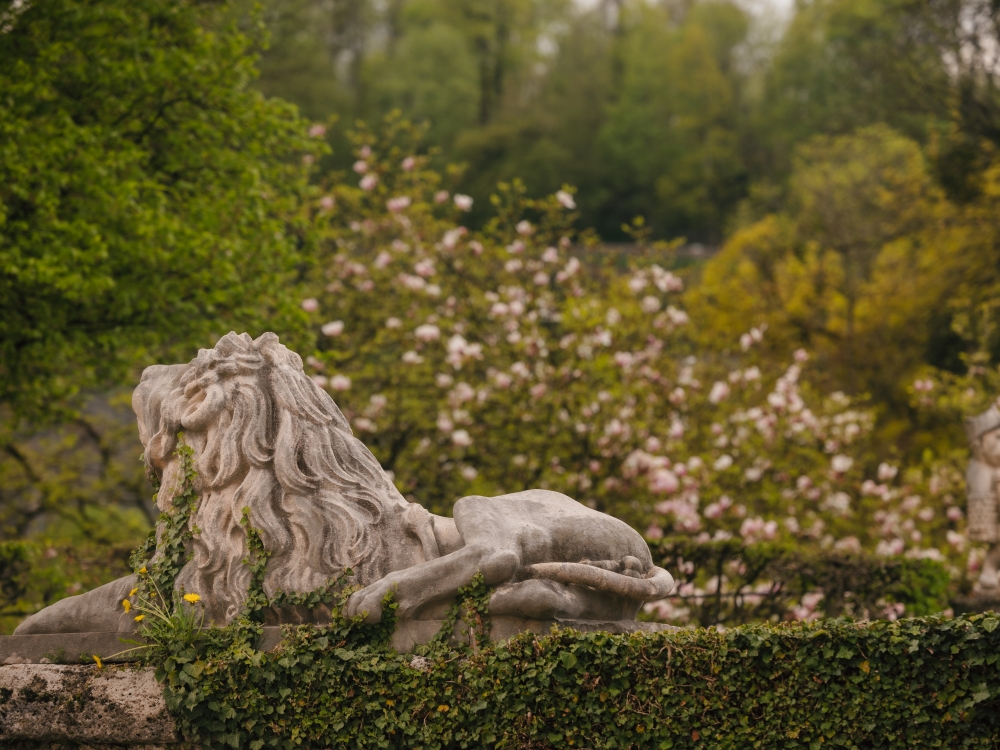
The so-called “Dwarf Garden” was also built as part of the redesign. It is the oldest of its kind in Europe. The 28 (today only 24) sculptures are made of Untersberg marble. They show humorous depictions of people of small stature. Fischer von Erlach thus followed the taste of the times.
The original gardens with several fountains and the 28 statues on high pedestals are no longer preserved. Today, the remaining 24 statues are located at the water bastion.