THE PLACE TO ENJOY
THE FASCINATING WORLD OF WINE
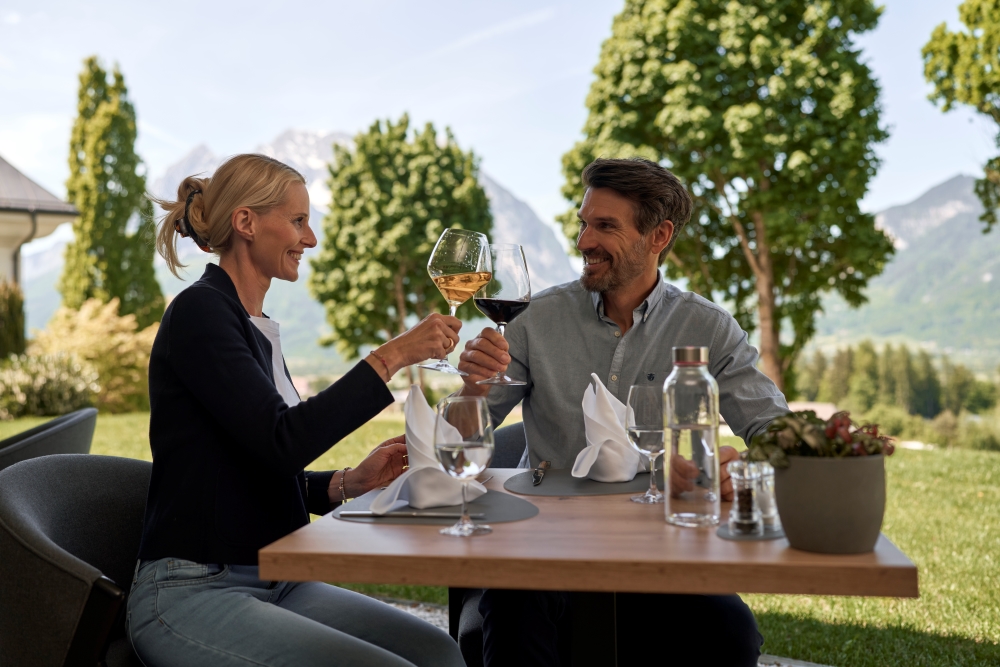
In a 5-star hotel, everything revolves around excellence—from the amenities and service to an exquisite selection of wines. The sommelier plays a special role in this, serving not only as a wine connoisseur but also as an ambassador of fine dining.
With a trained palate and a deep understanding of the complexities of wine, he ensures that every drop pairs perfectly with the dish, making the experience unforgettable for the guest.
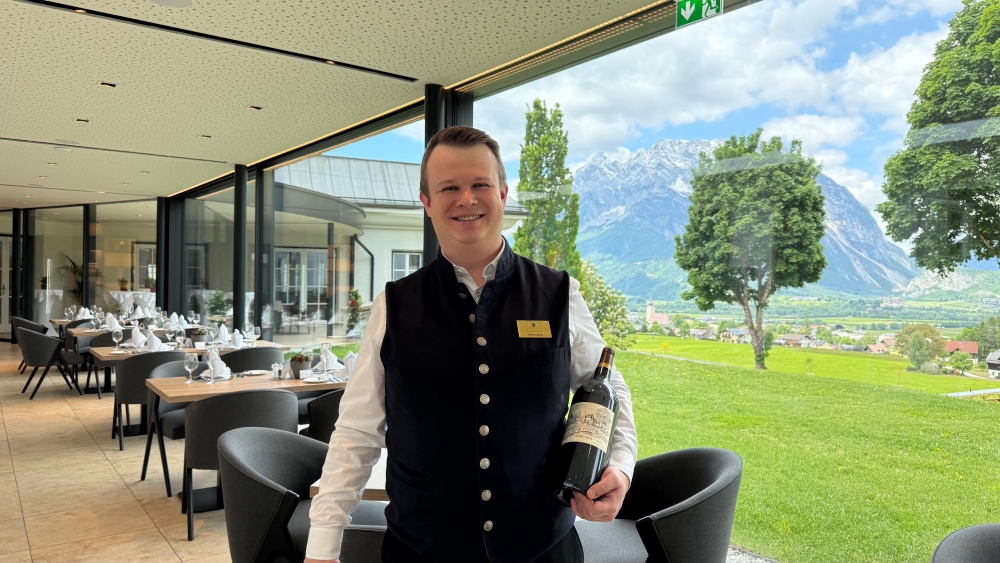
At the IMLAUER Hotel Schloss Pichlarn, certified sommelier Philipp Adamek is one of those who fulfills this role with passion and professionalism. He rejoined our team in December 2023 and honed his skills and knowledge at the Arlberg Hospiz Hotel, among other places, in Adi Werner’s renowned wine world.
What inspired you to become a sommelier?
From the very beginning, I’ve been fascinated by the fact that wine affects people in very different ways, and everyone has their own opinion about it. For example, what was the winemaker thinking when making this or that wine, and why did he make it exactly that way? What were the conditions like? Was it a good year for the wine? What options does the winemaker have?
Last year, for example, it was relatively difficult because there was a frost in the spring and heavy rainfall in the summer. As a result, most winemakers harvested early, which likely means the sugar content isn’t as high.
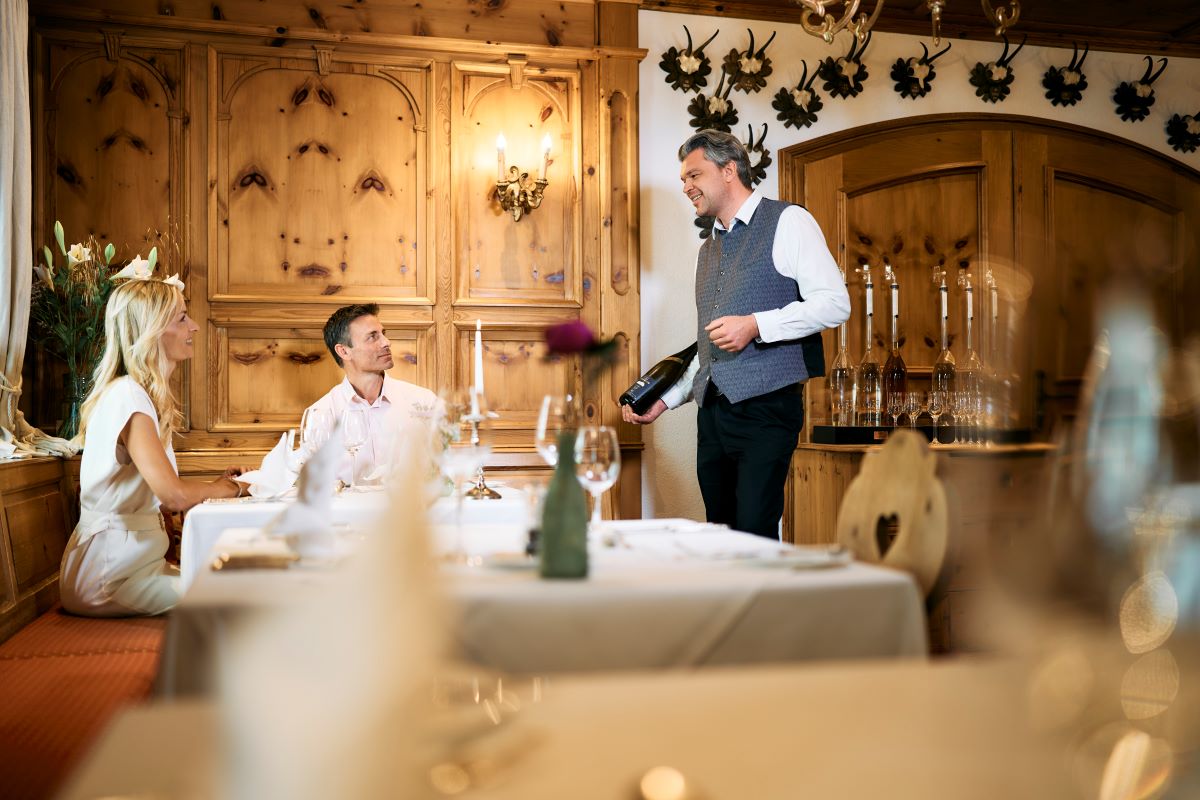
And then, of course, there’s the question of how to pour the wine and how to present it to the guests.
Another question is what the guest would like. The rules aren’t as strict these days—you don’t have to drink only white wine with fish and red wine with meat. To me, that’s what makes it exciting—and at the same time, that’s the art of the sommelier.
What skills and knowledge are essential for a head sommelier?
Expert knowledge is, of course, essential. There are basics you simply have to know, such as the type of soil in each area, the climate, and the methods the winemaker uses.
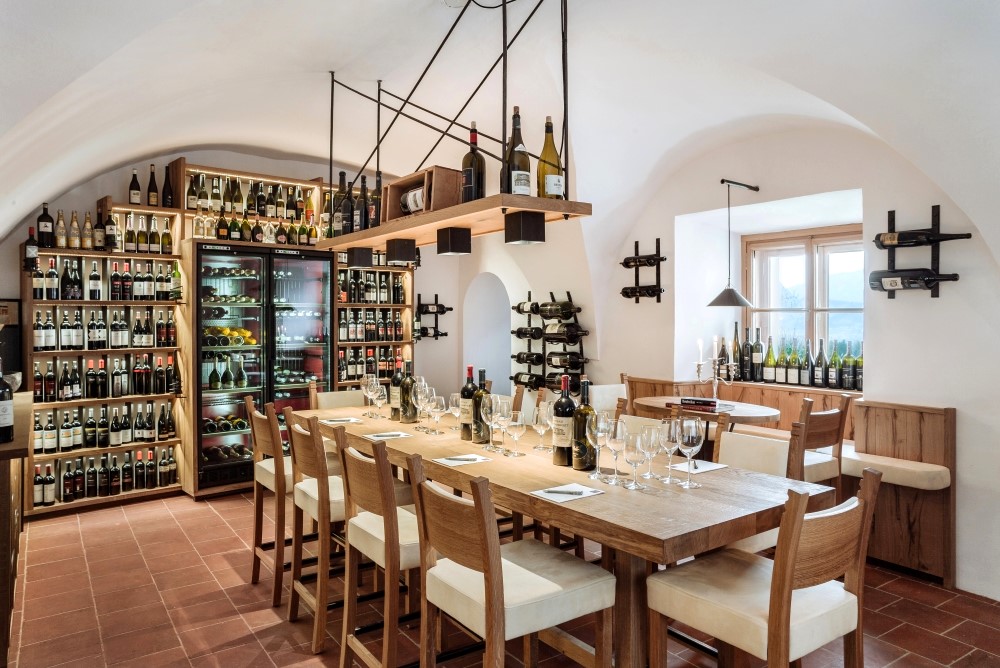
The sommelier should also be approachable on a personal level, both within the team and with the guests. If I just walk through the restaurant in a perfunctory manner, no one will buy a bottle of wine. I need to be able to present myself, the restaurant, and the wine. The wine list should be beautifully designed and everything clearly visible, using every means available for presentation, such as our wine lounge.
Sensory evaluation is also very important for assessing wine, but also for identifying a bad wine—one that has a cork taint or has been open too long. For example, there are certain tertiary aromas that develop after the wine has matured, and you have to be able to decide whether the wine has a defect or if it’s an aroma that will eventually dissipate.
“Food pairing” is an important topic. You look at which foods go well with which wines, or which flavors complement each other. I try to explain this to my apprentices and other staff members as well—especially when something is in season, like asparagus in the spring or game in the fall.
Another very important aspect is training our employees. When I see someone who’s enthusiastic about what I do and wants to learn more about it, that’s a huge success for me personally. We have a few people on the team who have already earned their sommelier certification or are currently working toward it.
What are the highlights of the wine selection here at the IMLAUER Hotel Schloss Pichlarn?
We’re definitely focusing on Austria. We’re now concentrating even more on Styrian wines—especially white wines—because there aren’t that many good red wines in Styria yet.
Then there are also white wines from Lower Austria. Those are the two largest categories we carry. Vienna is also a focus for us, particularly with the “gemischter Satz.”
And Austrian varieties in particular. We have Neuburger, Roter Veltliner, and Zierpfandler—these are varieties that not everyone is familiar with, but they’re incredibly pleasant. They’re often soft and Burgundian in style and pair very well with food.
When it comes to red wine in Austria, we’re naturally at home in Burgenland—especially Central and Southern Burgenland, but also the Golser region. That’s where you’ll find the most famous and best wineries for red wine.
We also place great emphasis on Bordeaux wines, as well as on Pinots—such as those from Burgundy. And when it comes to red wines, we focus on Italy, specifically Piedmont and Tuscany.
Another focus of our wine list is wines from certified organic or biodynamic vineyards—identifiable by the respective estate seal. This has been a long-standing trend. We also make a point of offering a comprehensive selection of wines from a single winemaker. When we evaluate a new winemaker, we taste their entire lineup. And if there are several wines we like, only those make it onto the menu.
There are also wines that need to age, usually the winery’s top wines. You have to plan for those over the long term because you want to have a bit of vintage depth—not just one vintage. Guests who are more serious about wine love being able to taste different vintages.
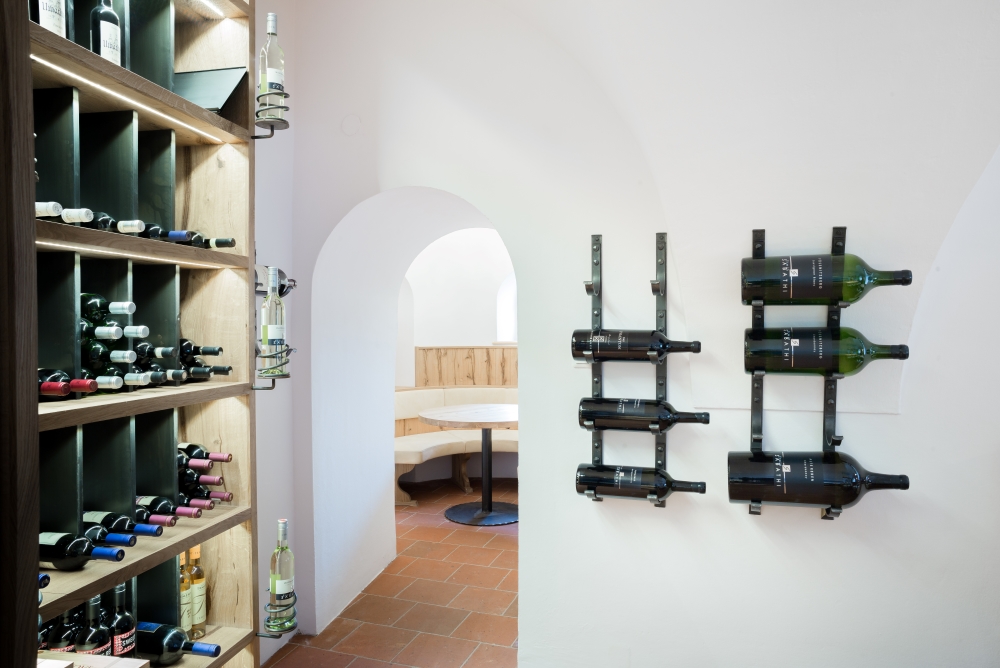
How many different wines do we offer our guests?
Only a small selection is on display in the wine lounge. In total, we have about 360 different wines: reds, whites, large bottles, small bottles, various vintages, and so on. All of these wines are also listed on our wine menu.
However, we don’t have a large cellar where we can age wines. Some winemakers and even large wine merchants do have that capacity, though. Take, for example, the Erwin Sabathi Winery in Leutschach, which ages its best wines for over 10 years in its own cellar. That’s very impressive.
Large companies like Morandell or Döllerer in Austria also have the capacity to store wines for longer periods, and we place orders with them on a regular basis.
What criteria are important to you when putting together the wine list?
It’s important to us that we have a good selection and that we don’t just focus on the high-end market, but can cater to various price points. Often, it doesn’t have to be the winemaker’s finest vintage—just a good bottle of wine to enjoy with a meal.
There are also many guests who only want to drink a specific wine—usually Welschriesling, Sauvignon Blanc, or Grüner Veltliner. You have to make sure you can cater to a large portion of your guests. That’s actually the most important thing when it comes to the wine list.
Of course, it should also be economical. It’s important to us that we stand behind the products—and the company or winemaker behind them. The best example is the Sabathi Winery. Hannes Sabathi really took the whole day to spend time with us. We talked with him to get a sense of who he is, how he views certain issues, how he produces his wine, what his favorite wine is, and so on. When selecting wines, we look for verifiable quality criteria—such as Demeter, Bio-Austria, or sustainability-certified wineries—as a clear guiding principle for our wine list.
Right now, more than half of our wines are from Austria, but the quality has to be right. We don’t carry a wine just because it’s from Austria—it has to be good.
When it comes to Rieslings, we’re more at home in Germany. Our neighbors are extremely precise and simply have a knack for this wine. No one can match them easily. We have two winemakers in particular—Van Volxem and Molitor—who are masters of their craft. They’re also outstanding individuals, and their wines simply have character, even if they’re a bit different from one another—one is a bit more powerful and the other a bit more straightforward—but both are superb wines.
The same goes for red wine: you can’t replace a genuine Burgundy, any more than you can replace a Bordeaux or a Barolo. We don’t cut any corners here.
When it comes to red wines from Austria, I personally consider Blaufränkisch to be the finest variety; we also have some top-quality cuvées and, little by little, some truly beautiful Pinot Noirs from Austria. Zweigelt is another standout. We make sure to carefully select wines from the regions where Austria excels.

What sets Styrian wine varieties apart?
I’d say it’s due to the Styrians—or Styria itself. We’re in the Illyrian region here. That’s a completely different climatic influence than, for example, the Pannonian climate. The Pannonian climate is much milder, with a great many hours of sunshine per year. That’s what these wines are known for—relatively full-bodied reds. They have a lot of body, a lot of sugar, and a lot of that Klosterneuburg character. The wines are very dense, and you can really taste that.
It’s completely different in Styria—in terms of temperature, sunshine, and the steepness of the terrain. In Styria, the vineyards can be so steep that all the workers have to secure themselves with a rope.
What I personally really like is the diversity. There’s the “Vulkanland Steiermark” region, located in eastern Styria. This includes the certified organic winery Schloss Kapfenberg (EU organic certification pursuant to Regulation (EC) No. 834/2007) as well as the Neumeister and Krispel wineries.
Then there’s Southern Styria and Western Styria. The full-bodied Schilcher wines come from Western Styria. In Southern Styria, on the other hand, there is, in my opinion, the highest concentration of top-class winemakers. There we have a great deal of Sauvignon Blanc and Chardonnay, which are very well known in the Austrian wine scene.
As for grape varieties, we have, for example, Sauvignon Blanc—ranging from everyday table wines to world-class wines. Muster.Gamlitz won the world championship with its 2020 Sauvignon Blanc Ried Grubthal.
The same goes for Chardonnay: Erwin Sabathi is considered one of the best and holds his own against the great Burgundies—for example, with his 2021 Chardonnay Pössnitzberger Kapelle.
Welschriesling, on the other hand, had fallen somewhat out of favor but is currently making a comeback. Then there’s Schilcher, Pinot Blanc, and Pinot Gris. These are the grape varieties most commonly used in Styria.